Church of the Redeemer (Jerusalem)
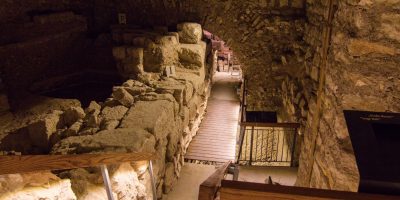
After three years of planning and construction, the archaeological park “Through the Ages” was opened on November 1, 2012 under the nave of the Protestant Church of the Redeemer in the Old City of Jerusalem. There, visitors are offered the opportunity to take a walk through the interesting and varied history of this place: from a Herodian quarry, gardens from the time of Jesus, evidence of the destruction of the city by Titus in 70 AD, buildings from the time of Hadrian, walls of the Constantinian marketplace to the mosaic floor from the Crusader church of St. Maria Latina. With the help of 3D animations and lighting effects, more than 2000 years of the city’s history are presented in a way that can be experienced and understood.
To the homepage of “Through the ages”.
Mount Zion (Jerusalem)
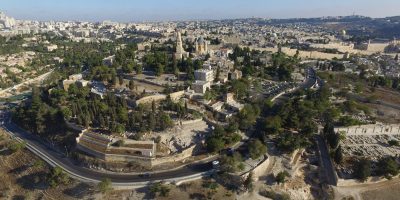
There is a more than 100-year-old excavation in the immediate vicinity of the Protestant cemetery. This is also to be restored and made accessible to visitors as part of the restoration of the cemetery. The excavation site must be secured and proposals for the presentation of the finds for pilgrims and tourists as well as for the maintenance of the historical heritage on southern Zion Hill must be developed.
To the homepage of the excavation.
The search for the second wall
When Herod the Great expanded the city of Jerusalem to the north in the second half of the 1st century BC, he also built a city wall to protect this settlement expansion. This went down in history as the so-called “Second Wall”. The “Second Wall” is a great, as yet unsolved, mystery in research, as no one knows exactly where it is located. In research, this city wall is of great importance, as it is used to determine the correctness of the place of Jesus’ crucifixion (Golgotha) and the burial site shown in the Church of the Holy Sepulchre. More information here.
Tall Zira’a
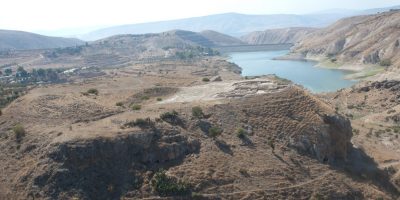
In 2001, the Biblical Archaeological Institute Wuppertal, in conjunction with other researchers and scientific institutions, began researching the lower part of the Wadi al-‘Arab in northern Jordan. DEI Amman became a project partner in 2004 and DEI Jerusalem in 2006. The aim is to research the diverse cultures in this valley, which is not only scenically attractive but also an important geopolitical link between the Mediterranean and Transjordan, since the beginning of the Neolithic period.
To the homepage of the Tall Zira’a project.
Amman Citadel (“ammap”)
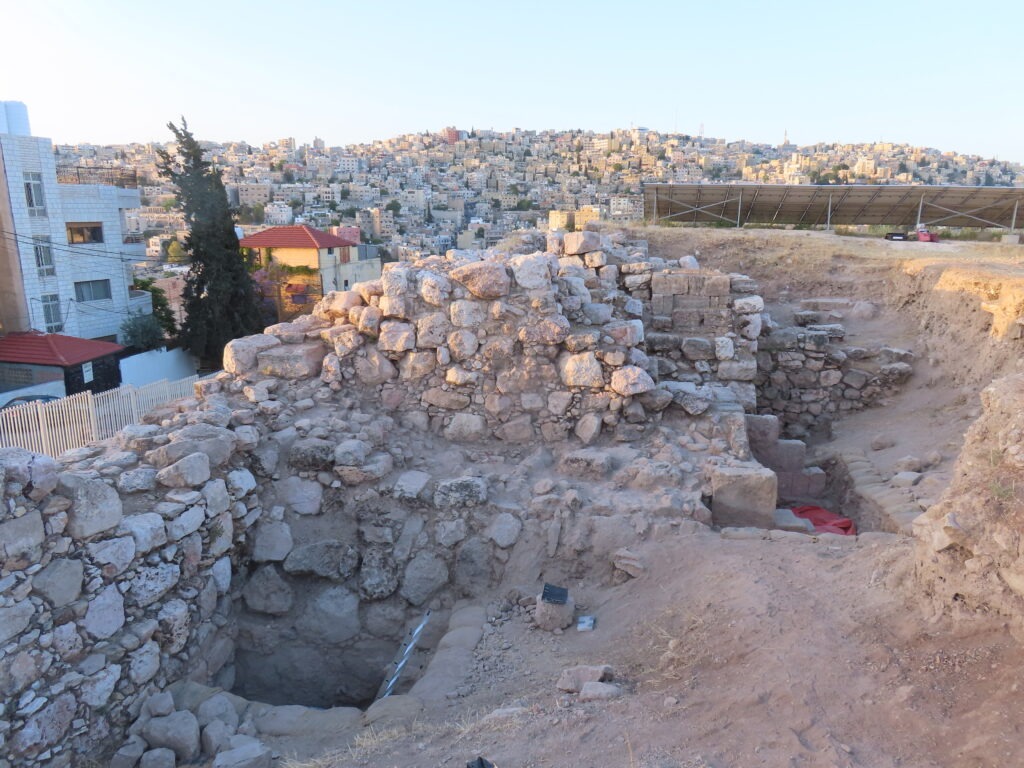
Since 2024, the DEI has been involved in a major research project under the direction of Prof. Dr. Katharina Schmidt (DAI / University of Münster) and Prof. emer. Dr. Zeidan Kafafi at the Amman Citadel. The project is dedicated to the center of the city of Ammon in the Iron Age and the Hellenistic period. Founded as Philadelphia by the Ptolemies around 270 BC, the city was obviously heavily fortified when it was conquered by the Seleucids. The identification and analysis of the Hellenistic defensive walls amidst earlier and later fortifications is the focus of the DEI’s sub-project at the very eastern end of the citadel’s lower terrace.
More about the overarching project:
https://www.uni-muenster.de/Ammap/en/about/amman-citdadel-excavation/index.html
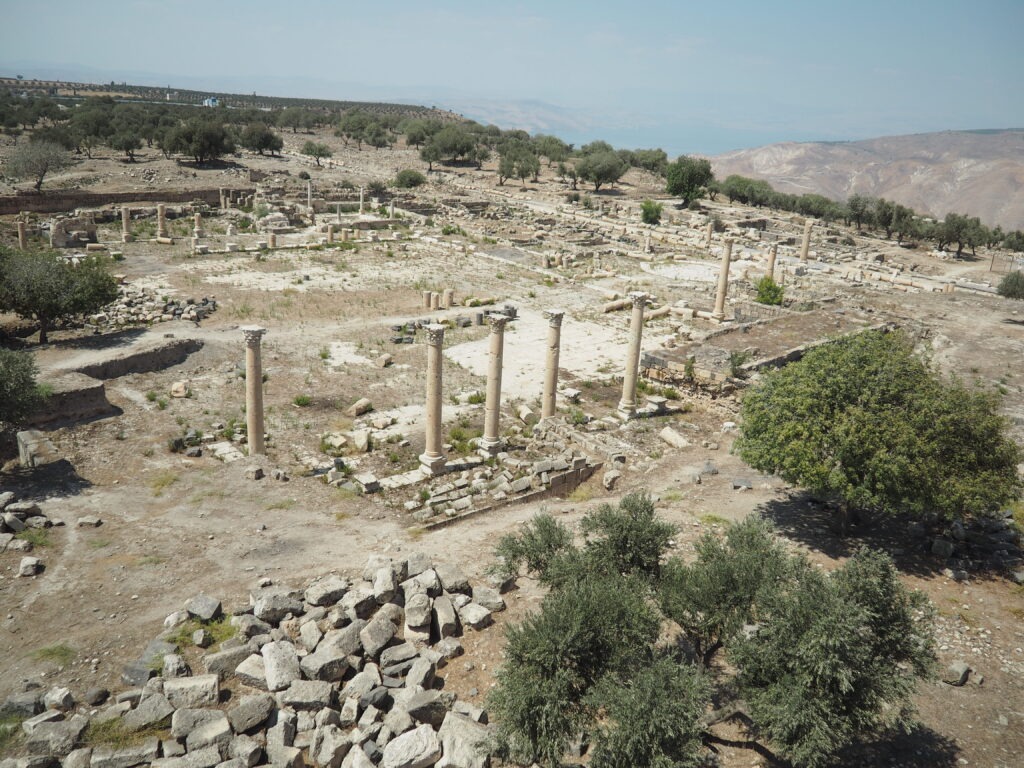
Peristyle courtyard complex in Gadara